

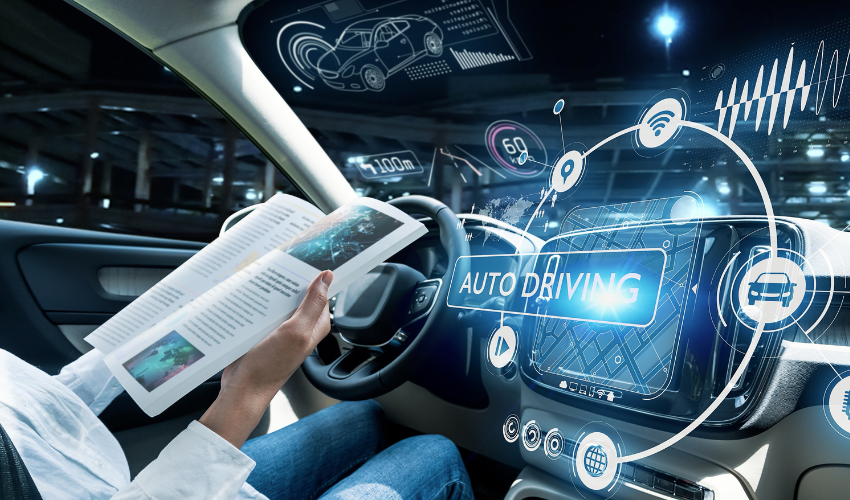
The automotive industry is undergoing its most significant transformation since the introduction of the assembly line. For over a century, the act of driving has relied entirely on human perception, judgment, and physical reflexes. However, rapid advancements in artificial intelligence, sensor technologies, and computational processing power are fundamentally rewriting this dynamic.
Autonomous driving technology is transitioning from an ambitious science fiction concept into a tangible, disruptive reality. As self-driving systems evolve from simple driver-assist features into fully independent vehicular pilots, they promise to reshape urban infrastructure, redefine logistics, and alter the human relationship with personal transportation.
Understanding the Levels of Driving Automation
To accurately track the rise of autonomous driving, one must understand the standardized framework used by the automotive industry. The Society of Automotive Engineers establishes six distinct levels of driving automation, ranging from total human control to absolute machine independence.
Driver Support Systems: Levels 0 through 2
-
Level 0 (No Automation): The human driver handles all operational tasks, including steering, braking, and accelerating, even if the vehicle possesses basic warning systems like blind-spot alerts.
-
Level 1 (Driver Assistance): The vehicle can assist with a single operational task. Examples include adaptive cruise control or lane-keeping assist, but the human driver must remain completely engaged and execute all other functions simultaneously.
-
Level 2 (Partial Automation): The vehicle can control both steering and acceleration or deceleration at the same time under specific conditions. However, the driver must maintain continuous supervision, keep their hands near the wheel, and be ready to intervene instantly. Many modern consumer vehicles feature Level 2 automation.
Automated Driving Systems: Levels 3 through 5
-
Level 3 (Conditional Automation): The vehicle is capable of driving itself under specific environmental conditions, such as on limited-access highways. The system monitors the driving environment, allowing the driver to look away from the road safely. However, the driver must be prepared to retake control within a specified window when the system requests intervention.
-
Level 4 (High Automation): The vehicle operates completely without human intervention within a defined geographic area or under specific weather parameters, a concept known as an operational design domain. If an unexpected hazard occurs or the vehicle exits its designated boundary, it can safely pull over and stop without human assistance.
-
Level 5 (Full Automation): The vehicle requires no human intervention under any circumstances, anywhere in the world, in any weather condition. A Level 5 vehicle does not require a steering wheel, pedals, or a traditional driver seat configuration.
The Core Technological Pillars of Self-Driving Systems
The ability of a machine to navigate complex, unpredictable environments safely relies on a highly integrated hardware and software stack. This technological ecosystem replicates and enhances human sensory capabilities and cognitive processing.
Sensor Fusion: The Perception Layer
An autonomous vehicle must build a real-time, three-dimensional map of its surroundings. To achieve this, it relies on sensor fusion, combining data from distinct sensor types to create a comprehensive picture of the environment.
-
LiDAR (Light Detection and Ranging): This technology emits millions of laser pulses per second to measure distances precisely. It creates highly accurate, three-dimensional point clouds of the surrounding terrain, allowing the vehicle to identify objects regardless of lighting conditions.
-
Radar Systems: Radar utilizes radio waves to detect the distance, speed, and angle of surrounding objects. It is highly effective at tracking distant vehicles and functions perfectly in adverse weather conditions like heavy rain, dense fog, or snow.
-
High-Resolution Optical Cameras: Cameras capture visual details, reading traffic lights, decoding temporary construction signs, and recognizing road markings. Artificial intelligence networks analyze these video feeds to classify objects like pedestrians, cyclists, and debris.
Artificial Intelligence and Compute Platforms: The Decision Layer
Gathering data is meaningless without the computational power to interpret it in real time. Autonomous vehicles house localized supercomputers running sophisticated deep-learning models. These systems interpret sensor data, predict the future behavior of surrounding motorists and pedestrians, and plan the safest path forward.
This decision-making process must happen within milliseconds, requiring immense data processing capacity and low-latency internal networks.
Market Drivers and Industrial Applications
While consumer media often focuses on personal self-driving cars, the initial commercial expansion of autonomous technology is occurring in industrial and commercial sectors.
Fleet Logistics and Long-Haul Trucking
The logistics industry faces persistent driver shortages, rising fuel costs, and strict regulatory limits on driver hours to prevent fatigue-related accidents. Autonomous long-haul trucking offers an immediate solution to these challenges.
Self-driving trucks can operate nearly twenty-four hours a day without stopping, significantly accelerating supply chains. Because autonomous systems drive with optimized acceleration and braking patterns, they also yield major improvements in fuel efficiency.
Robotaxi Services and Urban Mobility
In major metropolitan areas, autonomous ride-hailing networks are shifting from testing phases to commercial viability. These localized, Level 4 robotaxi fleets operate within geofenced urban centers, providing on-demand transportation.
By eliminating the cost of a human driver, these services have the potential to make ride-hailing more affordable than personal car ownership, reducing the need for massive parking infrastructure in city centers.
Challenges and Roadblocks to Mass Adoption
Despite rapid technological progress, several systemic hurdles must be cleared before autonomous vehicles become ubiquitous on global roadways.
The Problem of Edge Cases
Autonomous systems perform exceptionally well in standard, predictable driving scenarios. However, they struggle with edge cases, which are highly unusual, rare situations that the system may not have encountered during its training phase.
Examples include navigating a chaotic intersection during a natural disaster, interpreting a person wearing a costume riding an unusual vehicle, or managing a flooded road surface where lane lines are completely obscured. Programming artificial intelligence to handle these rare events with human-like intuition remains a primary challenge.
Liability, Legal Frameworks, and Ethics
The transition to autonomous driving shifts liability from the individual driver to the vehicle manufacturer and software developer. If an autonomous system causes an accident, establishing legal fault requires investigating software logs and sensor inputs.
Furthermore, global regulatory bodies face the difficult task of creating standardized safety certification processes that verify an autonomous system is significantly safer than an average human driver before allowing widespread public deployment.
Frequently Asked Questions
Why do some autonomous vehicle companies reject LiDAR technology in favor of pure camera systems?
Some manufacturers advocate for a vision-only approach, relying entirely on high-resolution cameras and advanced neural networks. The argument is that human beings navigate the world using only visual inputs, so a sufficiently advanced artificial intelligence should be able to do the same. This approach significantly reduces the production cost and aerodynamic drag of the vehicle, though opponents argue that omitting LiDAR removes a critical layer of safety and distance-measuring redundancy.
How do autonomous vehicles handle severe winter weather like heavy snow or ice?
Severe winter weather presents a major challenge for self-driving cars. Snow can obscure lane markings, ice reduces tire traction unpredictably, and falling flakes can interfere with optical cameras and LiDAR lasers. To counter this, developers use thermal imaging, sub-surface ground-penetrating radar, and localized weather data mapping to help the vehicle determine its position and maintain stability when visual markers are completely covered.
Can an autonomous vehicle be hacked or manipulated remotely?
Because autonomous vehicles rely on cellular connections for map updates, traffic data, and fleet communication, cyber security is a critical priority. A successful cyberattack could allow malicious actors to intercept vehicle control or manipulate sensor data. To prevent this, automotive engineers implement isolated vehicle networks, separating critical driving controls from infotainment systems, and utilize military-grade encryption for all incoming and outgoing data transmissions.
How will autonomous driving affect global employment inside the transportation sector?
The widespread adoption of autonomous trucks, delivery vans, and taxis will likely reshape the transportation labor market over the coming decades. While it may reduce the long-term demand for traditional long-haul truck drivers and taxi operators, it will simultaneously generate new employment opportunities. These include positions in remote vehicle monitoring, automated fleet maintenance, sensor calibration engineering, and specialized data management.
What is remote teleoperation, and how does it support self-driving fleets?
Remote teleoperation is a safety framework where human operators sit in a centralized command center and monitor autonomous fleets via live video and data feeds. If a Level 4 robotaxi encounters a confusing edge case, such as an unmapped construction zone with conflicting hand signals from a worker, it will stop safely and request assistance. The remote human operator can then review the cameras and safely guide the vehicle through the obstacle before returning it to autonomous mode.
Will autonomous vehicles completely eliminate traffic congestion in major metropolitan areas?
Autonomous vehicles have the potential to reduce traffic congestion significantly, but only when they reach a critical mass on the roadway. When self-driving cars can communicate with each other and with smart city infrastructure through vehicle-to-everything wireless networks, they can merge seamlessly, adjust speeds collectively to prevent bottlenecking, and travel closer together safely, maximizing existing highway capacity.
